
AIRCRAFT PARTS

|
|
|
AIRCRAFT PART FUNCTION
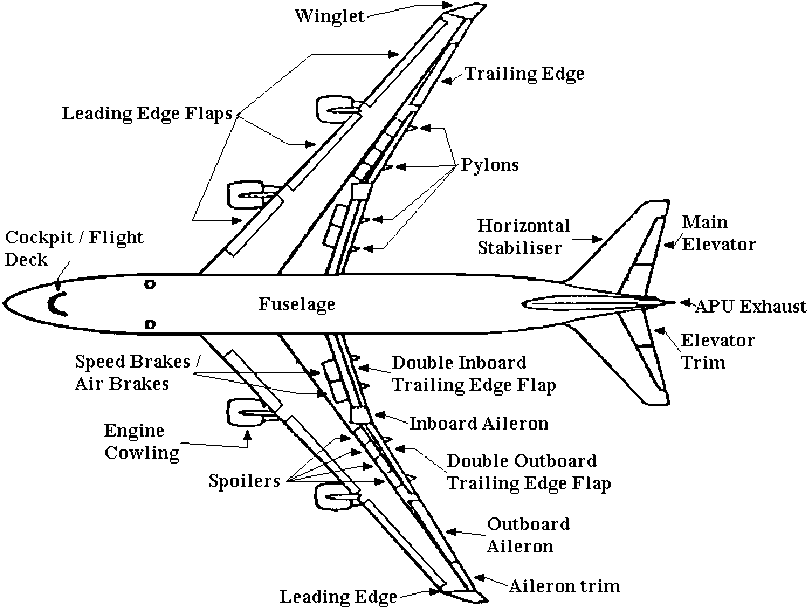
Aileron: To roll left & right.
Aileron Trim: To roll left & right a little.
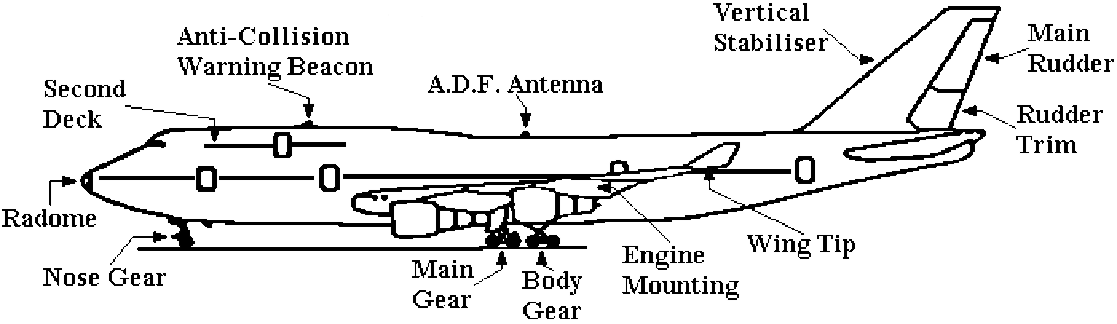
Anti-Collision Warning Beacon: A red light to warn other aircraft and help prevent mid-air collisions.
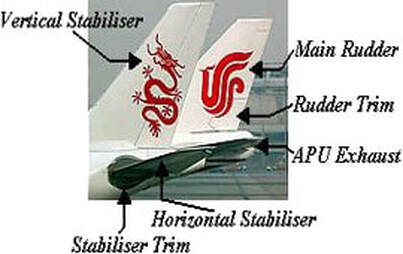
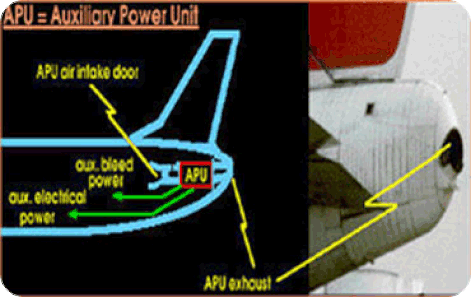
A.P.U. Exhaust: This is the exhaust pipe for the A.P.U. (Auxiliary Power Unit). The A.P.U. is an engine in the tail of the aircraft. It is used only on the ground. It generates electrical power for the aircraft and is used to start the jet engines.
Cockpit / Flight Deck: In this room, pilots aviate, communicate, and navigate.
Elevator Trim: To pitch up & down a little.
Aileron Trim: To roll left & right a little.
Anti-Collision Warning Beacon: A red light to warn other aircraft and help prevent mid-air collisions.
A.P.U. Exhaust: This is the exhaust pipe for the A.P.U. (Auxiliary Power Unit). The A.P.U. is an engine in the tail of the aircraft. It is used only on the ground. It generates electrical power for the aircraft and is used to start the jet engines.
Cockpit / Flight Deck: In this room, pilots aviate, communicate, and navigate.
Elevator Trim: To pitch up & down a little.
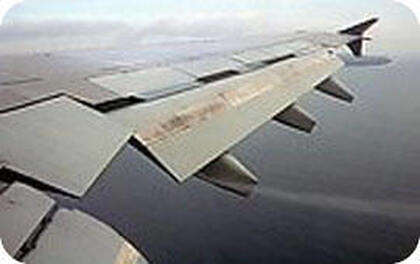
Engine Cowling: The main cover or housing of the engine.
Engine Mounting: Used to fix the engine to the wing.
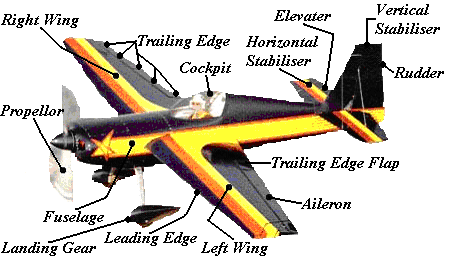
Flap: To increase lift during take-off and landing. Pilots extend the flaps to increase the wing's area. This increases the lift.
Fuselage: The body or structure of the aircraft.
Horizontal Stabiliser: Stabilises the aircraft around the lateral axis.
Landing Gear: Pilots extend or retract the landing gear (wheels) during take-off and landing.
Engine Mounting: Used to fix the engine to the wing.
Flap: To increase lift during take-off and landing. Pilots extend the flaps to increase the wing's area. This increases the lift.
Fuselage: The body or structure of the aircraft.
Horizontal Stabiliser: Stabilises the aircraft around the lateral axis.
Landing Gear: Pilots extend or retract the landing gear (wheels) during take-off and landing.
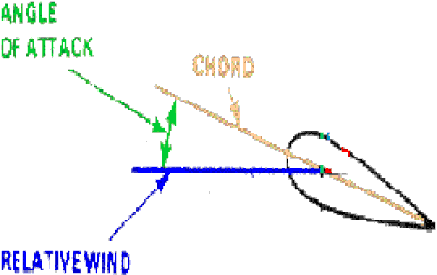
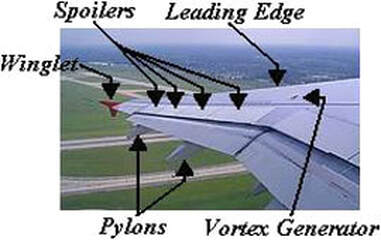
Leading Edge: Front section of the wing.
Main Elevator: To pitch up & down.
Main Rudder: To yaw (turn) left & right.
Nose Gear: The front wheels of the aircraft. Aircraft also have MAIN GEAR (wheels under the aircraft's wings) and sometimes BODY GEAR (wheels under the aircraft's body).
Propeller: Gives an aircraft thrust or power.
Main Elevator: To pitch up & down.
Main Rudder: To yaw (turn) left & right.
Nose Gear: The front wheels of the aircraft. Aircraft also have MAIN GEAR (wheels under the aircraft's wings) and sometimes BODY GEAR (wheels under the aircraft's body).
Propeller: Gives an aircraft thrust or power.
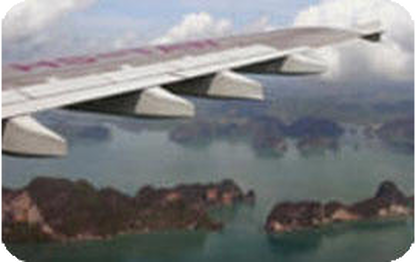
Pylons: Used to stabilise the air flow behind the wing. Without pylons, the air is unstable. This makes drag, and reduces the aircraft's speed and performance.
Radome: The aircraft's radar is inside the radome or nose of the aircraft.
Radome: The aircraft's radar is inside the radome or nose of the aircraft.
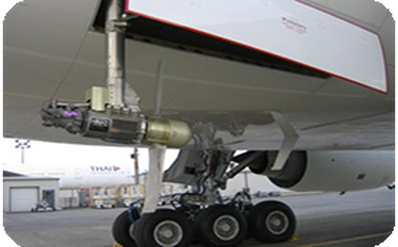
Ram Air Turbine (RAT): The RAT is only used in an emergency in case of loss of both primary and auxiliary power sources. It is a small wind turbine that generates power for vital systems (flight controls, hydraulics, and flight-critical instrumentation) from the airstream by ram pressure due to the speed of the aircraft.
Rudder Trim: To yaw left & right a little.
Speed Brakes / Air Brakes: Used to slow the plane in the air and while landing.
Rudder Trim: To yaw left & right a little.
Speed Brakes / Air Brakes: Used to slow the plane in the air and while landing.
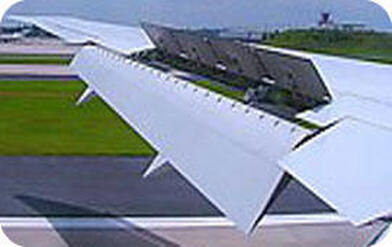
Spoilers: Used to destroy lift and keep the plane on the ground. This is important while landing. Without spoilers, the plane bounces on the runway. This can damage the landing gear. Some pilots prefer hard landings to help prevent bounce.
Stabiliser Trim: To increase the angle of attack (A.O.A.). Basically, the angle of attack is the angle the wing hits the air.
Trailing Edge: Back section of the wing.
Vertical Stabiliser: Stabilises the aircraft around the vertical axis.
Vortex Generator: Used to create lift in areas of the wing that have no or very little lift, for example, next to the engine mounting.
Stabiliser Trim: To increase the angle of attack (A.O.A.). Basically, the angle of attack is the angle the wing hits the air.
Trailing Edge: Back section of the wing.
Vertical Stabiliser: Stabilises the aircraft around the vertical axis.
Vortex Generator: Used to create lift in areas of the wing that have no or very little lift, for example, next to the engine mounting.
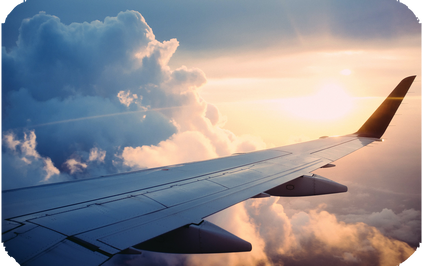
Trailing Edge: Back section of the wing.
Vertical Stabiliser: Stabilises the aircraft around the vertical axis.
Vortex Generator: Used to create lift in areas of the wing that have no or very little lift, for example, next to the engine mounting.
Winglet / Sharklet: Used to reduce the vortex at the end of the wing. A vortex is unstable circular air. It makes drag, and reduces the aircraft's speed and performance.
Wing Tip: The end or tip of the wing.
Vertical Stabiliser: Stabilises the aircraft around the vertical axis.
Vortex Generator: Used to create lift in areas of the wing that have no or very little lift, for example, next to the engine mounting.
Winglet / Sharklet: Used to reduce the vortex at the end of the wing. A vortex is unstable circular air. It makes drag, and reduces the aircraft's speed and performance.
Wing Tip: The end or tip of the wing.